
Your Schedule Is Dead by Lunch. Now What?
March 14, 2026 by Justin Martin
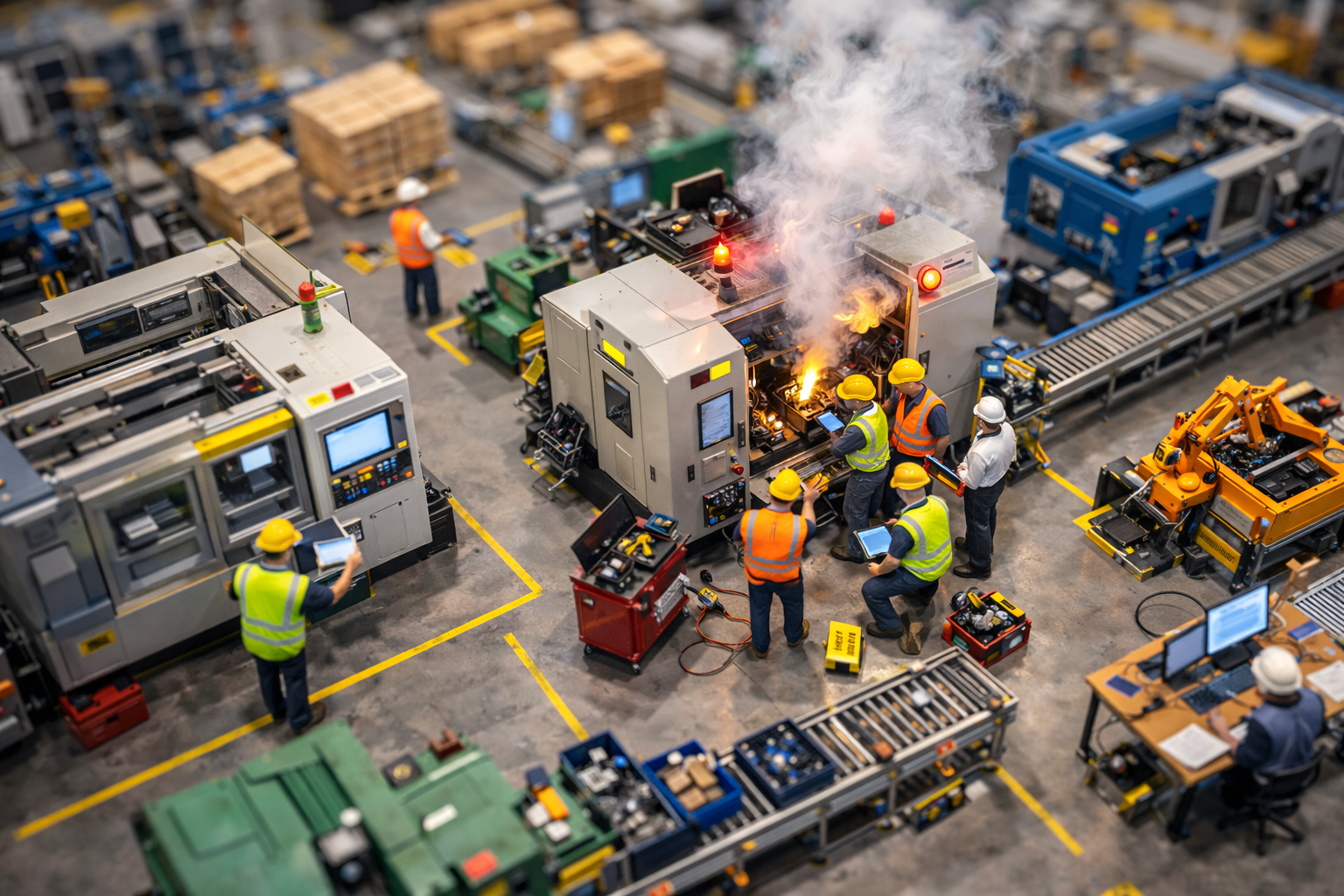
It's 10:47 AM on a Wednesday. Everything looked perfect at 6 AM. Then the CNC mill jams. Not catastrophically, just enough to need forty-five minutes to clean and reset.
That schedule you were confident about two hours ago? Already useless. Jobs are stacking up. Your biggest customer's part is still technically doable, but you're burning buffer fast. Do you rush a third shift? Call the customer? Shuffle three other jobs backward?
This isn't rare. This is every week.
Static schedules don't survive contact with reality
Machines fail. Rush orders land mid-shift. Material shows up late. People call in sick. Changeovers take longer than estimated. Quality issues force rework.
In discrete manufacturing, unplanned disruptions hit roughly every 90 to 120 minutes. Your schedule starts losing accuracy within the first few hours. By end of shift, you're often 30% or more off from what you planned. Most plants don't measure this. They just live with it.
What this actually costs
When a schedule breaks, operators wait for a supervisor to tell them what's next. Those micro-idle periods add up to 15 to 20% of a shift. Jobs that should finish at 3 PM don't wrap until 6, so overtime becomes structural instead of occasional. Rushed, tired people make mistakes, and quality and safety take the hit.
For a mid-sized plant running $5 to $10 million in monthly throughput, these inefficiencies collectively eat 5 to 8% of operational margin. That's not noise. That's profit.
The real problem isn't planning. It's visibility.
Most plants don't have a bad plan. They have old information. Machine 3 is down right now. Material is late right now. A rush order just landed right now. But you're still running yesterday's schedule.
The plan was never the problem. Operating blind was.
What real-time visibility actually changes
Real-time replanning isn't about tearing up the schedule every five minutes. It's three things working together.
Live data from the floor. Which machines are running, which jobs are done, what's stuck. Not yesterday's status. Right now.
Constraint-based logic. Most shops have one bottleneck that limits everything else. When you schedule around it, the rest flows naturally.
Automatic replanning. When reality breaks the plan, the system recalculates the best sequence given current conditions and tells you the new path to hit your delivery promises.
Plants that adopt this see 10 to 30% OEE increases, 15 to 40% downtime reduction, and 10 to 25% output gains. These aren't projections. They're operational results from real floors.
How to start
Measure your baseline. Pick one week. Count replans, track unplanned downtime, calculate the cost. It's almost always bigger than people expect.
Identify your constraint. What resource blocks the most jobs? Get clarity on this before anything else.
Get real data. Even without sensors, start logging actual cycle times and downtime. Two weeks of clean actuals beats years of estimates.
Then talk to vendors. Once you have real numbers, you can have a real conversation about what fits.
The bottom line
Your schedule will be obsolete before lunch. That's not a failure of planning. It's just manufacturing. The shops winning right now aren't the ones with the best plans on paper. They're the ones that can see what's happening and pivot instantly when reality doesn't match.
In 2026, real-time visibility isn't a luxury. It's baseline competitiveness.
Sources: PlanetTogether APS Research; FACTory Opportunity™ System, 2025; Lean Manufacturing and OEE Standards.